By State Representatives Viola Davis (D-Stone Mountain), Kim Schofield (D-Atlanta) and Sandra G. Scott (D-Rex)
(588 words)
As state legislators, we are issuing a warning following a devastating analysis of Congress’ proposed spending plan. The bill threatens to slash critical Medicaid funding, placing Georgia’s rural hospitals and the families they serve on the brink of collapse.
According to the 2025 Performance Audit of Georgia’s Rural Hospital Tax Credit, rural hospitals received $74.3 million in state-backed donations last year. Despite this funding, $42 million in donations went unspent, often tied up in long-term capital needs. With Congress’ proposed spending plan to cut $540 million in federal support to Georgia’s rural hospitals over 10 years, the situation is becoming unsustainable. While the program is largely compliant with state law, the audit reveals deep inequities in how funds are distributed and who benefits.
Our concerns and key disparities are highlighted below.
Contribution Gaps:
- Donations ranged from just $71,000 to nearly $4 million per hospital.
- Four of the 10 neediest hospitals received less than the average hospital contribution.
- Hospitals in greatest financial need were not prioritized because 98 percent of contributions were “designated” by donors, not based on need.
Use of Funds:
- In 2023, hospitals spent $70.5 million, but $42 million remains unspent, often tied to long-term capital needs.
- Top spending categories: capital improvements (26 percent), operating expenses (22 percent) and equipment (10 percent).
- Meanwhile, rural hospitals serve Medicaid-heavy populations and provide uncompensated care to indigent patients, absorbing the financial losses.
Taxpayer Disparities:
- High-income individuals earning over $700,000 claimed nearly half of all RHTC credits.
- Of the $44.2 million in tax credits claimed in 2023, 66 percent went to individual taxpayers, many of whom are far removed from the struggling communities these hospitals serve.
- Meanwhile, rural hospitals serve Medicaid-heavy populations and provide uncompensated care to indigent patients, absorbing the financial losses.
This is not a political issue – this is a life and death issue. Rural hospitals serve some of Georgia’s most vulnerable communities, many already hanging by a financial thread. Cutting Medicaid now is like draining the IV line from a patient in crisis or on life support.
Four hospitals have already been identified as at risk of shutting down or cutting services due to Congress’ spending proposal:
- Irwin County Hospital (Ocilla)
- Washington County Regional Medical Center (Sandersville)
- Fannin Regional Hospital (Blue Ridge)
- Flint River Community Hospital (Montezuma)
These hospitals are all RHTC-eligible, meaning they’ve already proven they operate in high-need, low-resource areas. Many rely on Medicaid reimbursements to survive.
The majority of constituents and many families in rural Georgia depend on Medicaid for life-saving care, from maternal health to chronic illness. Congress’ proposed spending plan would turn healthcare deserts into healthcare graveyards. It’s unjust and unconscionable.
Rural hospitals are the beating heart of Georgia’s underserved communities, and the proposed bill is threatening to stop that heart cold. These hospitals aren’t just buildings, they’re lifelines for mothers in labor, children with asthma, veterans suffering in silence and seniors with nowhere else to turn. Gutting Medicaid means gutting the last thread of dignity for communities already fighting for survival. We are not talking about politics; we are talking about people. If Congress lets this bill pass, the next emergency might not be an illness. It will be the silence of a closed hospital door in a town with no other options.
We are asking concerned citizens to visit https://www.usa.gov/elected-officials to find and contact their members of Congress and demand protection of Medicaid funding for Georgia’s hospitals. Georgians are urged to contact their U.S. senators and representatives and urge them to oppose the health care cuts in Congress’ proposed spending plan.
*Editor’s note: a photo of these representatives is included.
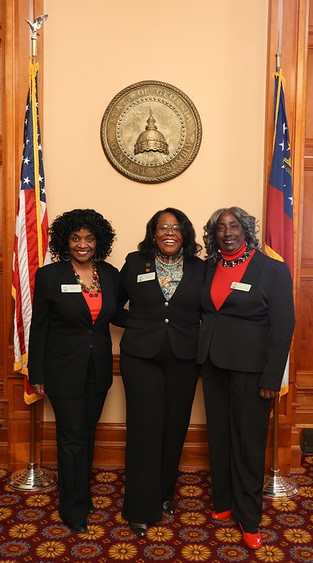
Representative Viola Davis represents the citizens of District 87, which includes a portion of DeKalb County. She was first elected to the House of Representatives in 2018 and currently serves on the Defense & Veterans Affairs, Health, Insurance, Natural Resources & Environment and Urban Affairs committees.
Representative Kim Schofield represents the citizens of District 63, which includes a portion of Fulton County. She was first elected to the House of Representatives in 2017 and currently serves as Secretary of the Urban Affairs Committee. She also serves on the Creative Arts & Entertainment, Health, Industry and Labor and Small Business Development committees.
Representative Sandra Scott represents the citizens of District 76, which includes a portion of Clayton County. She was first elected to the House of Representatives in 2010 and currently serves on the Banks & Banking, Defense & Veterans Affairs, Human Relations & Aging, Insurance and Reapportionment and Redistricting committees.
###